Accessible AV: Assisted Listening Systems (ALS)
What is an assisted listening system?
Assisted listening systems (ALS) send audio directly to a person’s hearing device. Background noise and interference is reduced this way, meaning the listener hears the audio more clearly rather than struggling to decipher what’s important from a PA system delivering audio in a large area.
ALS typically take the form of induction loops (also know as hearing loops) and Auracast and are used in public spaces like cinemas, hospitals, and churches.
ALS can also be installed in private residences to help listeners hear the TV or radio more easily.
Some ALS require the listener to have a separate receivers to their own hearing aid or headphones. In these cases the receiver is provided for the listener.
Types of assisted listening systems

Magnetic field audio transmitters
Induction Loops
Loop systems allow people with hearing aids to receive audio directly from a microphone or audio source into their hearing aids via a magnetic field.
Induction loops consist of one or more physical loops of cable around the perimeter of a room. A phased array hearing loop uses overlapping cable patterns which can be more effective for performance quality than a traditional induction loop.
Hearing loop systems can be used by hearing aid wearers whose devices have telecoil capabilities.
To use the loop system, hearing aids are set to the ‘T’ setting. Most contemporary hearing aids (over 90%) in the UK have telecoil capabilities.
Induction loops can be set up traditionally for a large room or via phased array. Hearing loops can also be designed for one to one use, or integrated into other technology like ticket machines.
Pricing for induction loops varies depending on need.

Auracast works via Bluetooth. It enables one-to-many audio broadcasting.
Many devices can be Auracast transmitters, meaning an ALS is easy to create in any setting.
Receiving devices include telecoil-enabled hearing aids, hearing implants, earbuds, headphones, or neckloops. Venues with Auracast infrastructure often have neckloop receivers that can be borrowed whilst in the building.
Multiple Auracast broadcasts can be made available in the same venue. The listener simply selects which broadcast they want to listen to via their phone or other device.
Standalone Auracast receivers are handheld devices with displays and buttons for selecting broadcast channels. Headphones and neckloops can be plugged directly into these devices.
Auracast broadcasts can be encrypted if the audio needs to stay private. This is ideal for workplace settings.
Pricing for Auracast technology depends on the number of transmitters required, number of personal receivers required, and how many audio streams are required.
Brands we recommend are Ampetronic, Listen Technologies, and Sennheiser.
Bluetooth audio broadcasting technology
Auracast
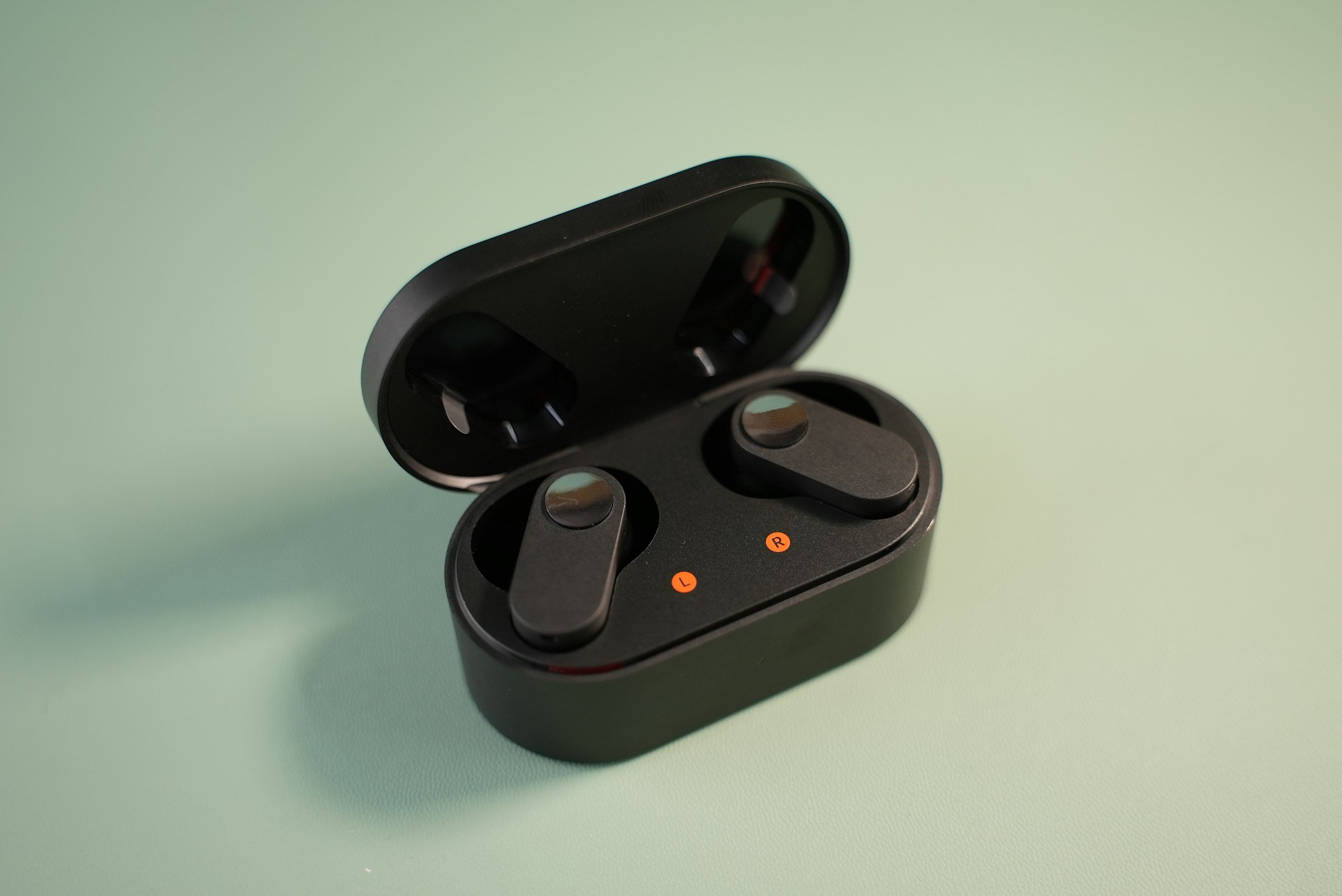
If an induction loop or Auracast isn’t suitable for your venue, other technologies are available to provide accessible audio in your building.
These are rarely our first choice to install but can prove effective when an induction loop or Auracast can’t be installed.
Infrared systems can be good solutions where audio needs to remain provide, as the audio signals don’t travels around corners or through walls. Unlike induction loops or Aurcast systems, an infrared system requires a special receiver to pick up the signal. Ther venue fitted with an infrared ALS is therefore required to provide this to the listener.
FM systems require the listener to ‘tune in’ to the radio channel of audio. These are often used in classrooms or settings where the listener moves around a location.
The costs of infrared or FM ALS systems depends on location and the amount of receivers required.
We are likely to steer you in the direction of installing a hearing loop or Auracast system over infrared or FM as they are more reliable and accessible.
Alternative technologies
Infrared / FM Systems
This video from Ampetronic shows how hearing loops work.
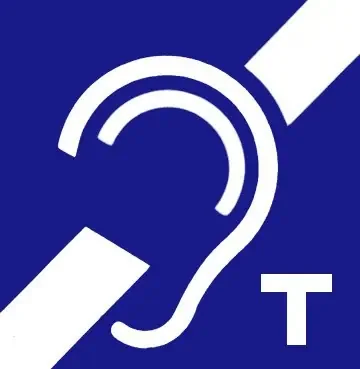
Hearing loops in a public place are indicated by this sign.

Auracast in a public venue is indicated by this sign
Why would i add an aLS to my AV installation?
Inclusive AV design means that people who are deaf or hard-of-hearing have access to the same audio as everyone else. In public settings where audio is a key component of the experience, adding an ALS system means that no one misses out.
Your audio system might be extremely impressive to able-bodied individuals, but frustrating for those with additional needs. Adding an ALS system provides a reasonable adjustment that renders the audio system impressive to everyone in the room.
This reasonable adjustment is seen as a legal requirement for service providers or employers to reduce barriers for disabled people under the Equality Act 2010.
In private spaces, ALS makes live easier for the listener, allowing them greater potential to be able to relax at home.
Either use case reduces the burden on the hearer to concentrate more intensely. The provision of ALS removes fatigue, frustration, or missing out on important details of an announcement or performance because of poor quality audio.
Are aLS difficult to install?
No! Particularly if you’re fitting the system alongside a traditional audio system and it’s being installed by a professional.
Installing a hearing loop is more labour intensive than installing WiFi, FM, or infrared assisted listening systems, however they are more reliable.
If you’re rewiring for a project, the cabling for a hearing loop system goes in at the same time as the rest of the cabling. A hearing loop requires a loop amplifier, microphone inputs, and loop cabling. There’s no reason why these can’t be installed at the same time as the overhaul of a traditional PA system.
If you don’t have the option to rewire your space, we can provide other assisted listening solutions as standalone installations or part of a wider project.
Good design is inclusive design.
All our installations are subject to survey.