The case for wired over wireless smart technology (why retrofits aren't our favourite)
Is there really that much of a difference between smart technology that’s wired into your home and smart technology that’s been retrofitted?
We think so.
That’s not to say that retrofitting is bad - sometimes it’s the only option for spaces that aren’t being built from scratch or renovated back to a rewire.
But if you’re building a home or you are stripping your building back to its bones, there’s more you can do to make your smart technology system work smarter and harder than only planning for smart features once your build’s finished.
Let’s take a look at three reasons why you might choose to hardwire your smart technology system (not just because it’s what we recommend).
1. For a more reliable system.
When cables connect your devices they’re less likely to become disconnected. That’s because of the obvious physical connection through hardware. This makes the whole system more stable.
Wireless systems rely on signals, so if there's interference (which might be caused by multiple wireless systems or devices all competing with each other, for instance), or devices drop-off the network, the system won’t work as effectively.
Drop offs can be caused by anything from a thick wall to the distance of a device from the WiFi access points (or your wireless router, on a simple project). . They’re fixable, but it can be frustrating to find the root cause and stop them happening again.
Connection speed also factors here. Data travels faster over cables, making your system run more quickly. That means there’s no lag when you switch your lights on through the system. It’s a fractional time difference, but it matters.
When you hardwire your smart system, your hardware also receives a stable source of power. That reduces the need for device battery changes, and maintains consistency across the system when power fluctuates.
It’s not magic though, so if the power’s out, your lights are out, just like they would be without smart lighting and no backup power source. Although if you do get one of a backup power system, this won't be an issue.
2. For simplification of your system.
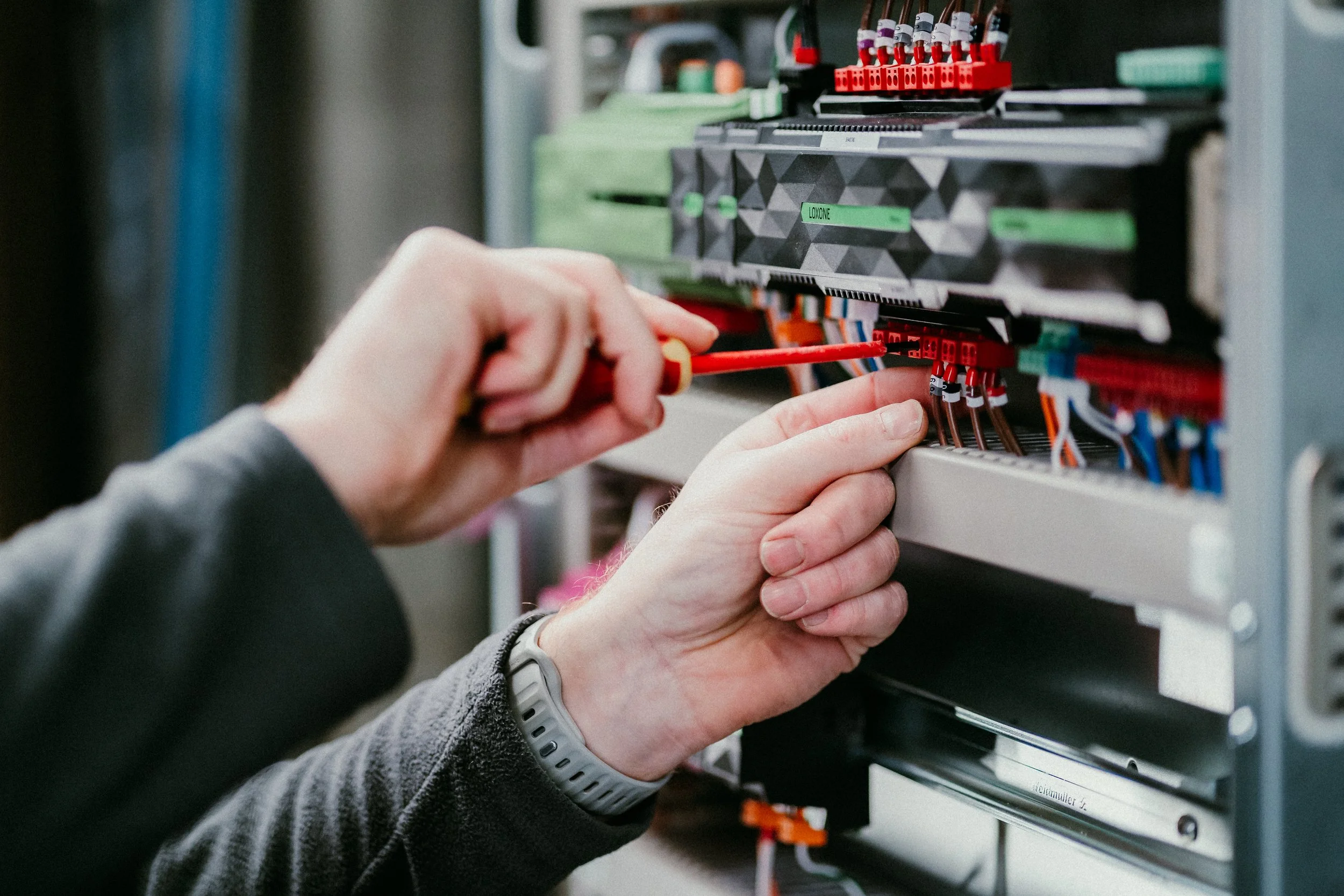
That means one app for managing your system and one communications cupboard for your wiring and your home’s ‘brain’. If everything’s connected by wires installed in a panel by the same people, it’s also more likely to be tidier.
This helps with the overall aesthetic of your home, too, as most of your technology is out-of-sight, out-of-mind. You don’t need to worry about finding prominent positions for devices to speak to one another over the WiFi or remain within the right distance of a coverage area.
We think smart technology should be hardwired for both optimised integration and seamlessly elegant aesthetics. This one’s an easy one. The one thing you do need to think about is the position of your comms cupboard - somewhere central in your house is ideal.
We pride ourselves on the tidy workmanship of our panels, by the way.
3. To leave room for potential expansion.
Off the back of simplification comes our third point - expansion potential. This can also be the most cost effective method of hardwiring your smart system, as you can prioritise your essential spend on elements like heating and lighting and plan for audio and visual down the line.
With the right infrastructure in place, new automation can very easily be added to your space and connected to the rest of your system.
That means you retain the single app functionality, and you don’t need to change your control hardware - it simply needs to be reconfigured to meet new requirements.
The right installer will always recommend taking the step to leave room for changes to your system. They shouldn’t push products that you don’t want or can’t afford, but they should advise you on how to get the best from your smart system for many years to come.
That might challenge your thinking about what you want to install, but if you’re working with a trustworthy partner it’s wise to heed their direction.
In any case, it’s easier to plan for expansion at the beginning of a project than attempt a retrofit later. One day the sunshine you love filtering in through your bedroom window might prevent you from getting to sleep in the summer, so you want automated blinds.
Or maybe, like one of our clients, you did the ‘boring’ bits first then want to go all out on an audio system when you have more disposable income. Hardwiring gives you space for change.
As mentioned, we can retrofit smart technology systems, but we don’t advise it when the privilege of building or renovating allows you to control exactly what goes into your building from the ground up.
Take a look at our smart home planning guide for more information on how to get started.