Epitome Living’s 2026 smart tech predictions
Happy new year, everyone!
It’s time to ‘circle back’ on everything you thought you’d left behind in December.
It’s also time to get cracking with your plans for 2026.
For some, that will be building a new home or making steps to upgrade a building you already own or have the budget to improve. Congratulations if this is the case!
Others will be keeping an eye on home tech developments throughout the year as they plan a build or office upgrade for a later date.
We’re always on the look out for tech developments, particularly when it comes to smart building technology, as we want to give our clients the best experience possible with what we install for them.
I (Amy) asked the team what their 2026 home tech predictions are, and here’s what they came up with.
Tactile hardware is back
Richard (installation technician):
“From my experience, I feel that there are going to be leaps further forward in AI, which is both scary and exciting at the same time. I envisage seeing AI more in the home automation and smart home sector through integrated systems via AI.
“I also see health and wellness being a trend that utilises technology and could also be integrated into the home and is something that people are becoming more conscious about.”
Jordan (systems designer):
“I think we’ll see our clients focus on energy management this year. That looks like consolidating data from things like heat pumps and solar systems, and monitoring grid usage, then using that data to make buildings more efficient and ultimately cheaper to run long term.
“This came up a couple of times with people I spoke to at the Selfbuild Extend & Renovate Show in Lisburn. One person I spoke to explicitly said that they would rather spend more up front to bring their bills down for the next number of years.
“The other thing I hope to see would be a move away from apps, and a focus on systems that mean the user doesn't have to take their phone out every five minutes. Designing control in a way that is non-intrusive, but keeps any key actions at fingertips using well thought out switch locations, and functions will be key for people in 2026, particularly if they want to cut their screen time.
“The Loxone products we work with already offer this function, which is a huge plus for our clients already and one of the key reasons why we’re a Loxone Partner.
“We’ll be back at Selfbuild in Leinster on 7th and 8th February this year if you want to chat to us about any of the above. It’s at the National Show Centre in Dublin and we’ll be there 10am-6pm both days.”
Amy (marketing and communications manager):
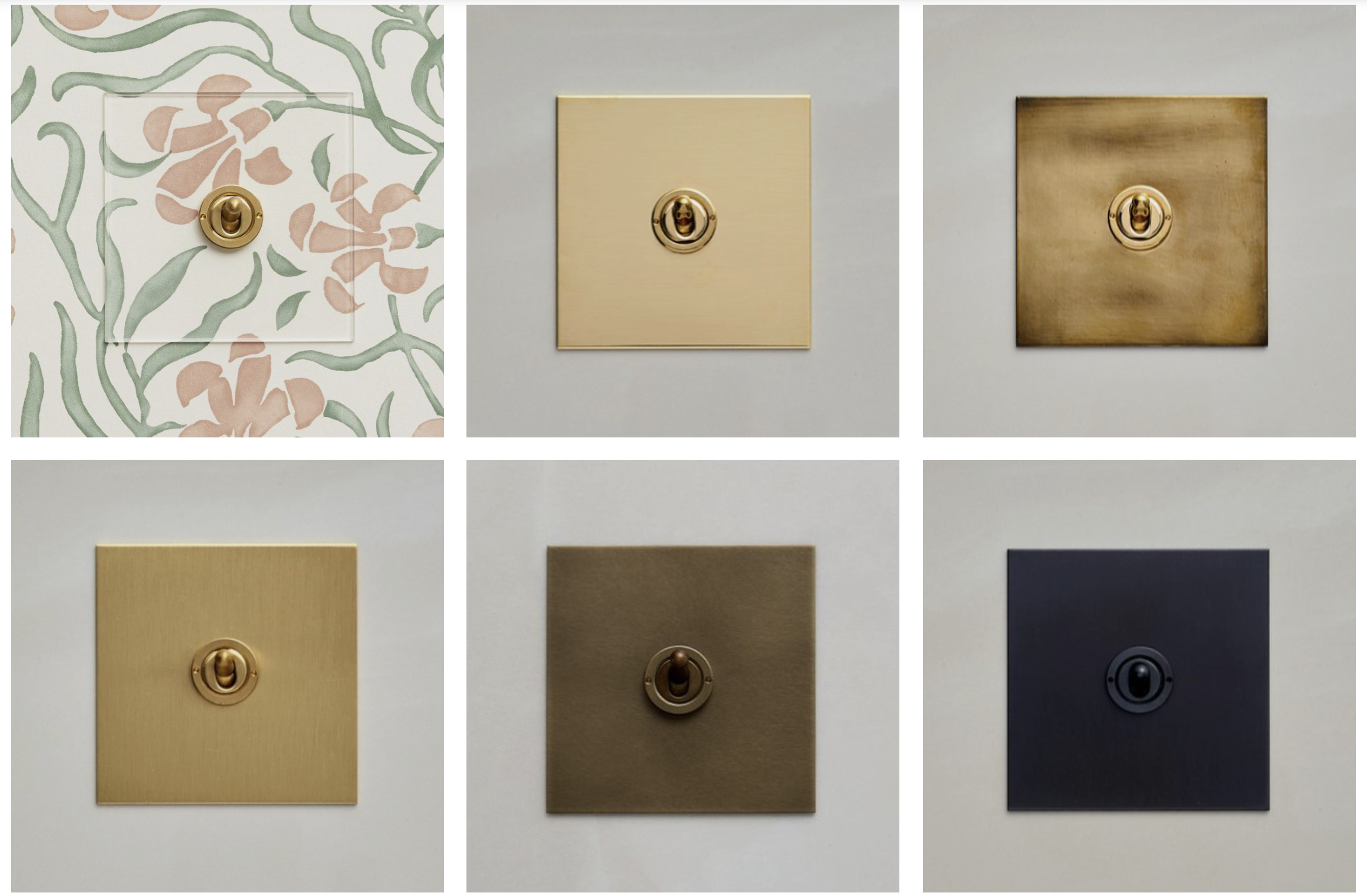
“I think we’ll see a shift in how people pick their smart systems hardware. As people continue to lean into nostalgia, and want the technology they use every day to become invisible, I think we’ll see a move to more tactile hardware choices, like toggle switches rather than touch screen switches.
“A positive for people wanting these nostalgic touches paired with contemporary technology is that these can be integrated with the smart systems we install. Our goal is that technology should be seamlessly integrated and invisible where appropriate, with your hardware designed to support automation configurations that have been designed around you and your lifestyle.”
Lee Harrison (apprentice):
“Technology is changing in a way. More stuff in a house electrically is becoming invisible, and the technology is all in the programming behind the scenes to make it easier for clients.
“I think people will want more low voltage wiring in their houses in 2026, because this is more energy efficient and they will save more money on electricity.There are so many benefits of having a smart home, too. Like controlling your house through your app on your phone or having programmes like your heating turning on on a schedule through your phone.”
Scott (founder and director):
“My first prediction is that we’ll see people head back to basics and seek tactility.
“We hear about the overuse of touch screens in the news. It's a big deal with cars, for example, with The European New Car Assessment (Euro NCAP) actually forcing manufacturers to use buttons, not just touch screens, to get a five star rating.
"New Euro NCAP tests due in 2026 will encourage manufacturers to use separate, physical controls for basic functions in an intuitive manner, limiting eyes-off-road time and therefore promoting safer driving.
“That desire for tactility is on the up. We're hearing more requests for "old school" switches and less desire for apps. That's exactly where a control system and automation can really help. We get rid of the multitude of apps, and the need for lots of different interfaces.
“This lets those clients deal with simple, easy to use wall switches, with the complexity behind the scenes. Sometimes, the goal is to leave no trace of tech.”
“My second prediction is that people will seek out spaces for disconnected experiences.
“In the 1930s, John Maynard Keynes is often cited to have commented on how one of the issues of technological development and progress would be that we may end up reducing the working week to 15 hours within a century.
“I quote from his essay ‘Economic Possibilities for our Grandchildren’: “Thus for the first time since his creation man will be faced with his real, permanent problem - how to use his freedom from pressing economic cares, how to occupy the leisure, which science and compound interest will have won for him, to live wisely and agreeably and well..”
“Now, nearly a century later, it doesn't seem like that concern about having too much free time has really held up...
“Instead, we continue to be connected at an ever more alarming rate. To combat this, big steps often need to be taken. Sometimes that means having a separate space, free of the usual every day, always on technology.
“In a luxury home, that could be a space for simply listening to music, with no distractions. Or, a space for a family to gather together and watch a movie together in an immersive experience. Crafting these spaces with minimal distractions and maximum immersive experience needs thoughtful design at the start, and expert input throughout the project.”
*Photo from Forbes & Lomax